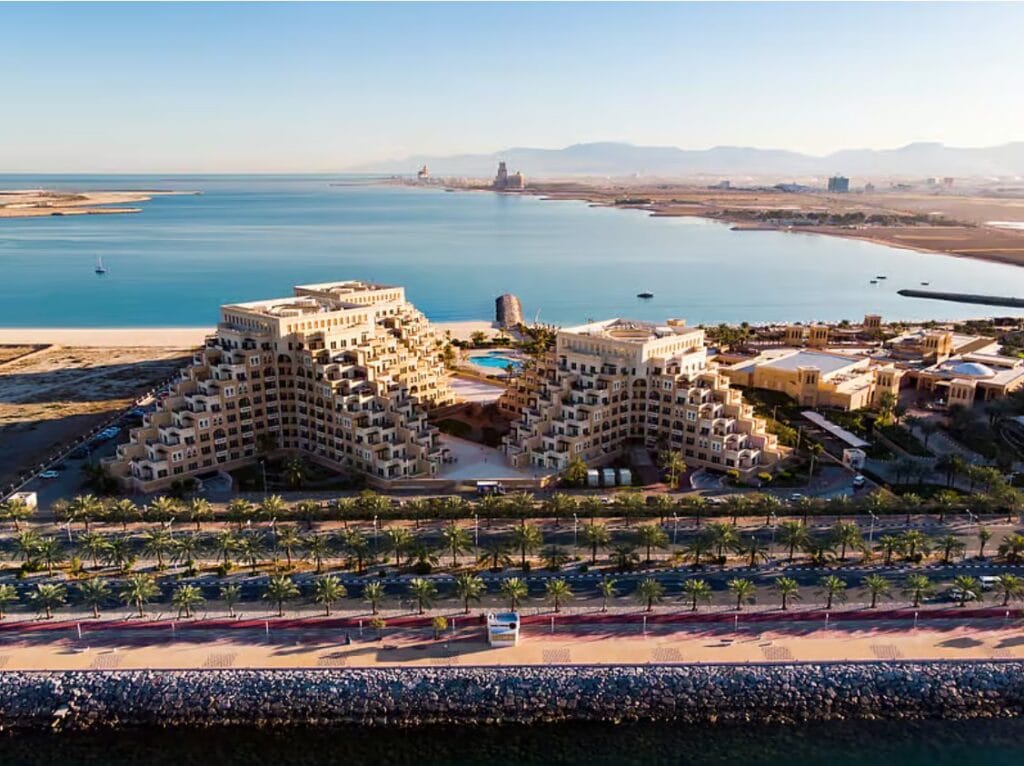

Most people who research relocation to the UAE start with Dubai. They spend weeks on Dubai guides, Dubai neighbourhoods, Dubai visa types. Then, somewhere in the process, they pause and ask: ‘But what about Abu Dhabi?’
It’s a good question. And increasingly, it’s the right one.
Abu Dhabi is the UAE’s capital, its largest emirate, and the engine behind the country’s most substantial economic growth. While Dubai gets the headlines, Abu Dhabi is quietly building the infrastructure, the institutions, and the talent base that defines the region’s next chapter. The emirate added more than 290,000 residents in 2024 alone, reaching a total population of 4.14 million – a 7.5% single-year increase that outpaces virtually every comparable city in the world.
If you’re an executive, an HR leader managing an international assignment, or a professional weighing your options in the Gulf, this guide covers everything you need to know about relocating to Abu Dhabi in 2026.
Relocating to Abu Dhabi is well-structured and increasingly accessible. Most professionals enter on an employer-sponsored residence visa, while investors and qualified professionals can qualify for the UAE Golden Visa. Abu Dhabi offers lower costs than Dubai, strong safety and education infrastructure, and a job market expanding rapidly across finance, energy, technology, and healthcare.
Why 2026 Is Abu Dhabi’s Year
Something meaningful is happening in Abu Dhabi right now, and it’s visible in the numbers.
The Abu Dhabi Global Market (ADGM), the emirate’s international financial centre, recorded 245% growth in assets under management in 2024. It now hosts over 1,800 registered entities and more than 30,000 professionals, up from around 1,000 entities in 2022. In recent months, Man Group, Capital Group, and Bain Capital have each opened new offices within the centre’s jurisdiction, according to the Abu Dhabi Media Office.
Abu Dhabi’s GDP grew 3.8% in 2024 to an all-time high of AED 1.2 trillion. Critically, non-oil sectors accounted for 54.7% of that total – the first time non-oil industries have formed the majority of the economy. Economic licence issuances rose 16% in the same year, according to official data published by the Statistics Centre Abu Dhabi (SCAD).
For professionals and companies, this isn’t abstract. It means more employers, more roles, more institutional momentum, and more reasons to put down roots here.
Abu Dhabi has also held the title of the world’s safest city for nine consecutive years and ranked as the most liveable city in MENA for the seventh consecutive year in 2025. For multinational companies deploying assignees, these aren’t just lifestyle statistics. Lower security risk, predictable infrastructure, and consistent quality of life translate directly into higher retention and easier talent attraction.
Who Is Moving to Abu Dhabi?
Abu Dhabi’s population grew by 51% over the past decade, rising from 2.7 million in 2014 to over 4.1 million in 2024. The emirate’s workforce expanded by 9.1% in 2024 alone, with professional roles increasing by 6.4%, reflecting a deliberate shift toward knowledge-based industries.
The people driving that growth fit a recognisable profile. They’re professionals targeting the energy transition, healthcare expansion, financial services, and government-linked technology programmes. They’re families drawn by the quality of international schools and Abu Dhabi’s unmatched safety record. They’re investors and entrepreneurs attracted by the Golden Visa and the ADGM ecosystem. And they’re executives assigned from multinationals using Abu Dhabi as a strategic base for the broader Gulf market.
Henley & Partners’ World’s Wealthiest Cities Report 2025 places Abu Dhabi among the fastest-growing destinations for high-net-worth individuals globally, with the number of millionaires residing there having nearly doubled to 17,800 over the past decade.
Visas and Residency: Your Route In
Abu Dhabi follows UAE federal visa regulations, so the residency pathways are consistent across emirates. The three most relevant options for professionals relocating to Abu Dhabi are as follows.
Employer-sponsored residence visa. The most common route. Your employer handles the application, which covers a two-year residency, Emirates ID, and health insurance. Since 2022, employers are required to cover the cost of visa processing and Emirates ID registration, removing a significant upfront financial burden for new arrivals. Our UAE immigration services cover the full application process end to end.
UAE Golden Visa. Ten years of residency without employer sponsorship. Available to investors (minimum AED 2 million in property or fixed deposit), qualified professionals in healthcare, education, technology, and media, and outstanding students and researchers. It allows up to 12 consecutive months outside the UAE without losing residency status – particularly useful for executives with international commitments.
Green Visa. A five-year self-sponsored option for freelancers, entrepreneurs, and skilled workers meeting income thresholds. It permits sponsorship of dependants and doesn’t require employer backing. For professionals based in Abu Dhabi while operating across the region, it’s a practical and increasingly popular path.
All residence visa applicants must complete a medical fitness examination, covering communicable disease screening, chest X-ray, and standard blood tests. EER Middle East team coordinates this as part of the arrival process.
The Practical Reality: Costs, Housing, and Schools
One of the least-discussed facts about Abu Dhabi is that it’s typically 20 to 30% less expensive than Dubai. Rent in desirable areas like Al Raha Beach, Khalifa City, and near the Corniche runs AED 6,000 to AED 8,000 per month for a one-bedroom apartment. Utility bills, driven heavily by air conditioning from June through September, average AED 1,200 to AED 1,500 per month.
For families, Abu Dhabi’s school fee regulation is notably different from Dubai’s. The Abu Dhabi Department of Education and Knowledge (ADEK) regulates annual fee increases more strictly than Dubai’s equivalent authority, and some schools receive government subsidies. British, American, and International Baccalaureate curricula are all well-represented, with established schools across Khalifa City, Al Raha, and Saadiyat Island. Annual fees range from AED 15,000 to AED 100,000, and early applications are strongly advised – places in sought-after schools fill quickly.
Housing payments are typically made in one to four post-dated cheques annually. That means a significant portion of your yearly rent may be due upfront, so budgeting for cash flow before you arrive is essential.
Healthcare is modern, well-regulated, and predominantly English-speaking. Most employment packages include private health insurance, and private clinics offer fast, flexible access. Abu Dhabi is a driving city – a reliable car makes daily life significantly easier outside of walkable pockets near the Corniche.
Our Abu Dhabi relocation services include home search, school search, and settling-in coordination – managing the practical setup so you can focus on the move itself.
Abu Dhabi vs Dubai: Choosing the Right Base
Most professionals researching the UAE eventually ask: ‘Should I be looking at Dubai instead?’ It’s worth answering directly.
Dubai offers a broader and more varied job market, particularly across hospitality, retail, and consumer-facing sectors. It’s more internationally connected in terms of flight routes, and its social and leisure infrastructure is more developed. Rents are 20 to 30% higher, and the pace is faster. It suits professionals who want maximum variety, career optionality, and a genuinely global-city environment.
Abu Dhabi suits a different profile. If your role is anchored in energy, sovereign investment, government-linked programmes, or financial services through ADGM, the opportunities in Abu Dhabi are increasingly hard to match elsewhere. The cost advantage is real. The quality of life is consistently high, particularly for family-accompanied moves. Career progression may be steadier rather than rapid, but the institutional depth offers stability that Dubai’s more transactional market sometimes doesn’t.
For companies deploying assignees, Abu Dhabi typically means lower-cost packages, stronger retention among family-accompanied moves, and robust compliance infrastructure. The regulatory environment is well-developed, which matters when you’re managing corporate obligations across multiple jurisdictions.
Start Your Abu Dhabi Relocation with EER Middle East
Relocating to Abu Dhabi involves more moving parts than most guides acknowledge. The visa process connects to your housing timeline, which connects to school applications, which connects to banking setup. Each step depends on the one before it.
EER Middle East has a dedicated Abu Dhabi office at Makeen Tower, staffed by a team with deep local knowledge and direct relationships with the relevant authorities. We handle corporate services, immigration processing, and end-to-end relocation support – including home search, school search, and settling-in coordination – for individuals, families, and multinational organisations.
If you’re planning a move to Abu Dhabi, we’re ready to help you do it right.