
Developed by EER Middle East in collaboration with Altair Global, combining local expertise in Saudi Arabia with a global mobility management perspective.
When Vision 2030 launched in 2016, it set out to diversify Saudi Arabia’s economy, attract international investment, and reduce reliance on oil. A decade on, the transformation is creating new opportunities and new considerations for global employers, particularly those moving talent into and within the Kingdom.
As a supplier partner to Altair Global, a leading experience-focused global relocation management company, EER Middle East sees the impact of Vision 2030 every day, supporting businesses establishing and expanding in the Kingdom, employees relocating with their families and organisations navigating immigration, Saudization, corporate services, destination services and government relations.
Saudi Arabia is no longer a market that businesses are simply exploring. For many, it has become a long-term strategic investment, with global mobility increasingly playing a role in how organisations attract, deploy and retain the talent needed to support that growth.
How Vision 2030 is reshaping Saudi Arabia’s key industries
Much of the international attention has focused on flagship developments such as NEOM, AlUla, Diriyah, Red Sea Global and Qiddiya. But these represent only one part of a much broader strategy.
Energy remains fundamental, but the sector is evolving. Renewable energy, hydrogen and carbon capture are creating demand for specialist technical expertise and project leadership alongside local capability building.

Technology and digital transformation are reshaping how businesses operate, from AI and cloud computing to logistics and mobility platforms. Healthcare, pharmaceuticals and life sciences are also expanding, particularly in areas such as biologics manufacturing and AI-enabled healthcare.
Meanwhile, growth in tourism, hospitality and entertainment is influencing food and beverage and consumer goods, while investment in aerospace, aviation, advanced manufacturing and railway systems is strengthening the Kingdom’s position as a global transport hub.
For employers and their global mobility teams, this diversification creates significant opportunities alongside growing competition for talent.
Competition for talent in Saudi Arabia is intensifying
Saudi Arabia is not competing for talent in isolation.
Regional hubs such as Dubai and Abu Dhabi have a longer-established reputation among international assignees, particularly around schooling, lifestyle and workplace familiarity. Attracting the same calibre of talent to Saudi Arabia can mean moving efficiently through the recruitment and relocation process while being transparent about what life in the Kingdom actually looks like today.
This is especially relevant for experienced professionals in areas such as engineering, technology and project management, where demand extends across multiple sectors.
Yet attracting talent is only part of the equation. Employers must also consider how international expertise aligns with Saudi Arabia’s broader workforce development goals.
For mobility teams, the employee experience begins well before an individual arrives in the Kingdom. Clear communication, efficient processes and realistic expectations can all influence an individual’s decision to accept an assignment and their subsequent experience.
“From a client partner perspective, Saudi Arabia is increasingly a market where mobility strategy needs to be considered alongside broader workforce planning. The organizations that plan relocation early, align assignment types to business needs and prepare relocating employees and families for the realities of the destination are better positioned to support both business growth and a positive employee experience.”
— Michelle Baxter, Senior Vice President, EMEA, Altair Global
Saudization and international expertise should work together
A common misconception is that Saudization means companies are no longer hiring expatriates.
In reality, localisation and international expertise should be viewed as complementary phases of long-term capability building, rather than competing objectives.
In highly specialised and rapidly developing fields — including hydrogen and carbon capture engineering, biologics manufacturing, AI-enabled healthcare, advanced logistics automation and railway and mobility systems — international professionals continue to play an important role.
A practical way to think about this is a Build, Transfer, Sustain model.
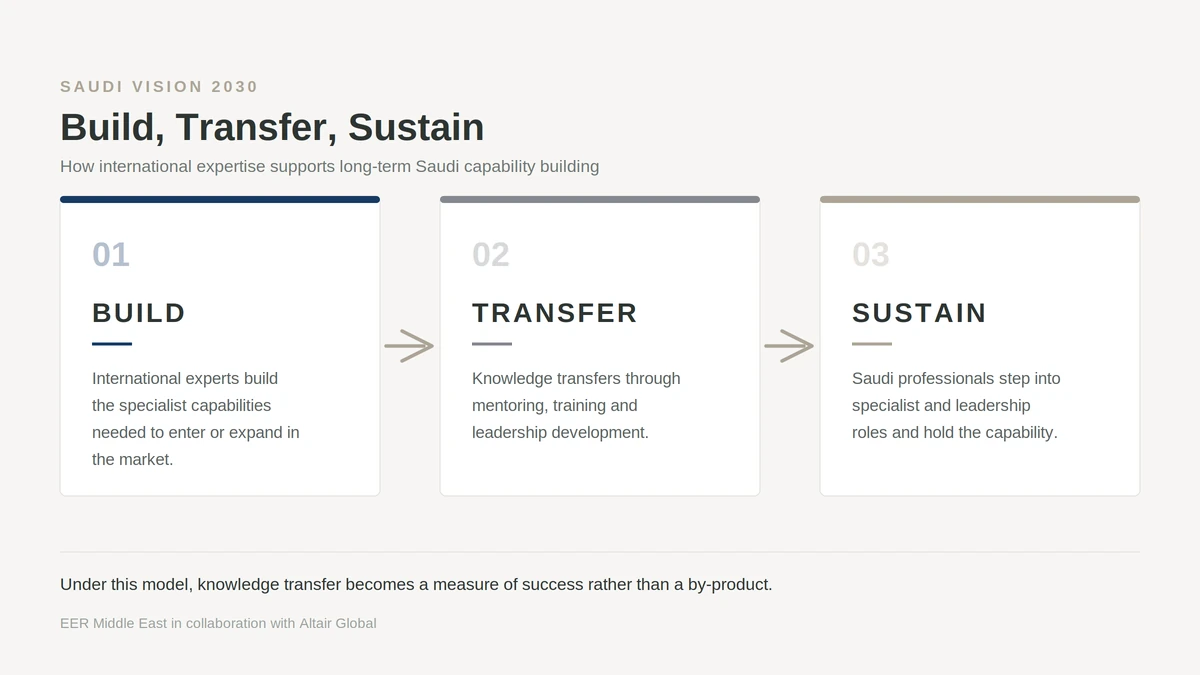
International experts help build the specialist capabilities required to enter or expand in the market. Knowledge is then transferred through mentoring, training and leadership development before organisations focus on sustaining those capabilities by developing Saudi professionals into specialist and leadership positions.
Under this model, knowledge transfer becomes a measure of success rather than simply an informal by-product of employing international talent.
The long-term objective is not simply greater Saudi participation in the workforce. Increasingly, it is about developing the next generation of Saudi specialists and leaders while ensuring international assignments contribute to that broader capability-building effort.
Saudi Arabia’s younger workforce has evolving expectations
Building sustainable local capability also requires employers to understand the changing expectations of Saudi Arabia’s younger workforce.
Young Saudis entering the workplace are ambitious, digitally savvy and optimistic about the Kingdom’s future. At the same time, their expectations of employers are evolving.
Career progression and professional development are increasingly important, while younger professionals want to understand the purpose of their work and how their role contributes to their organisation and the Kingdom’s wider ambitions.
Expectations around workplace culture are also changing. Working models vary significantly between sectors and organisations, but exposure to global practices has influenced expectations around flexibility, access to leadership and opportunities to contribute ideas.
Competitive compensation remains important, but so do inclusion, meritocracy, strong leadership and genuine opportunities for professional development.
The workplace itself has also evolved significantly. Women are leading businesses and working across government, finance, technology, healthcare and engineering, while taking on increasingly senior positions across both the public and private sectors.
For international employers and their global mobility teams, understanding these changes is an important part of attracting and retaining Saudi talent while also ensuring relocating employees arrive with an accurate and current understanding of the Kingdom.
Housing and relocation pressure in Riyadh and the industrial hubs
“Beyond workforce expectations, practical considerations continue to shape an employee’s experience and a company’s ability to attract and retain talent,” says Daniel Danko, Vice President of Supplier Partner Experience at Altair Global. “Housing availability remains one of the most significant operational challenges for corporate relocation.”
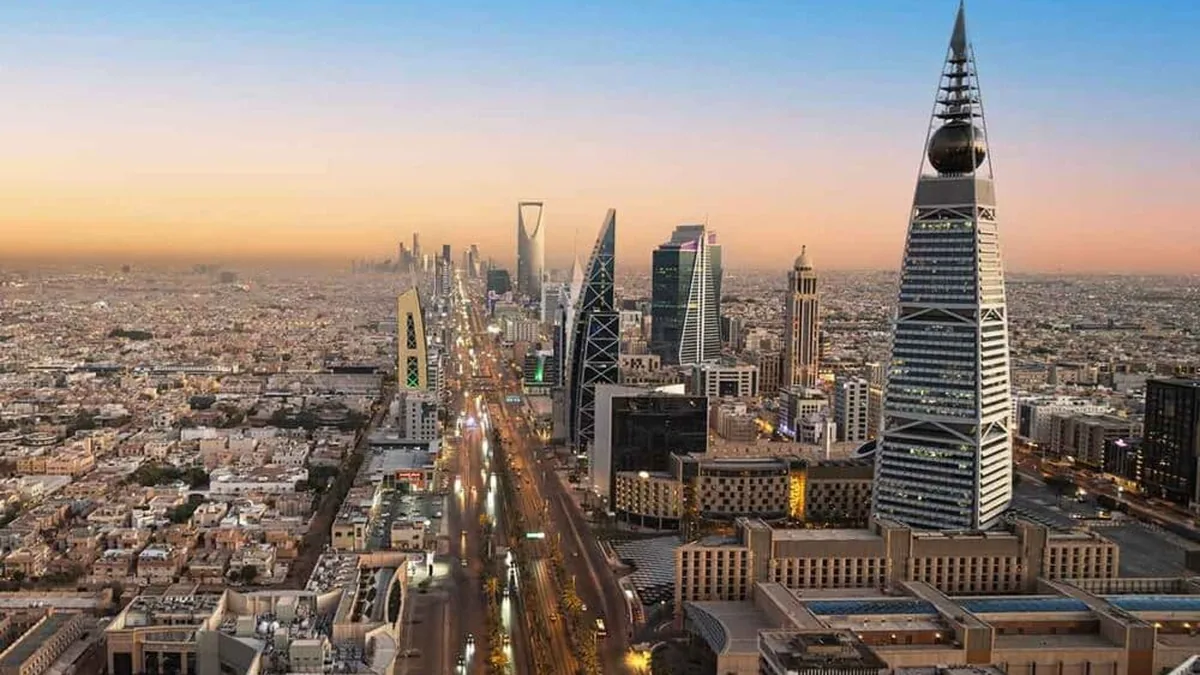
Housing demand is rising fastest in Riyadh, but energy and industrial hubs such as Dhahran, Jubail, Yanbu and Al Khobar face their own challenges, including a more limited supply of family-suitable accommodation and competition for housing close to major industrial sites.
This links to a decision employers need to make early: whether an assignment should be accompanied or unaccompanied.
Accompanied assignments involve greater upfront investment, including family visas, schooling and appropriately sized housing, but can support longer-term assignments, particularly for senior roles.
Unaccompanied or rotational assignments remain common in remote or early-stage industrial locations where family infrastructure may be more limited. These assignments bring different considerations, including rotation cycles, travel arrangements and support for employees spending extended periods away from their families.
Neither model is inherently better. The right approach depends on the role, location and individual and should be a deliberate decision rather than a default.
Relocating to Saudi Arabia: the employee experience starts before arrival
Relocating to Saudi Arabia involves far more than obtaining a visa.
Employers need to plan for immigration, document attestation, housing, schooling and family support long before an employee boards a flight. Understanding local systems — including Qiwa, Muqeem and Absher — is also an important part of operating and living in the Kingdom.
Cultural preparation is equally important.
While pre-departure orientation can help set expectations, cultural adaptation continues long after an employee arrives. Ongoing support can help employees understand local customs, business etiquette and workplace expectations as they encounter them in day-to-day life.

Family support should also form part of this process.
Accompanying spouses often experience a very different relocation journey from the employee. Without an immediate workplace or professional network, they may face challenges around establishing a new routine, building social connections and maintaining their own career aspirations.
Support that recognises these different experiences — from practical settling-in assistance and peer networks to opportunities for continued professional engagement — can contribute to a more positive experience for the entire family.
At EER Middle East, our experience has shown us that successful relocation support should extend beyond moving an employee from one country to another. It is about helping individuals and families build sustainable lives in their new location.
Global mobility providers in Saudi Arabia are becoming strategic partners
For multinational organisations, this increasingly requires a combination of global programme oversight and local market expertise. While global mobility teams need consistency, governance and visibility across locations, successful outcomes in Saudi Arabia still depend on partners who understand the realities on the ground.
“A mobility program can be well designed at a global level, but its success in Saudi Arabia depends on the strength of the local delivery network. Supplier partners bring the market knowledge and on-the-ground perspective that help turn a global mobility strategy into a practical experience for relocating employees and their families. Their expertise helps organizations navigate regulatory requirements, cultural nuances, and service expectations, ensuring both compliance and a positive assignee experience throughout the relocation journey.”
— Daniel Danko, Vice President, Supplier Partner Experience, Altair Global
As investment diversifies across sectors, mobility providers have become far more than relocation coordinators.
An energy business mobilising specialist technical employees has very different requirements from a technology company opening a regional office or a pharmaceutical business relocating senior leadership.
At the same time, mobility and localisation are increasingly connected. Employers need to consider not only how they move the right talent into the Kingdom, but how those assignments contribute to knowledge transfer, capability development and long-term workforce goals.
This requires partners who understand immigration, destination services, Saudization, government processes and the practical realities of relocating employees and their families.
The most successful relocations are those where every stage, from workforce planning and pre-arrival preparation to immigration, cultural awareness and settling in, is considered as one connected journey.
Looking ahead: building the right foundations in Saudi Arabia
For international businesses, the question is no longer simply whether to enter the Saudi market, but how to build the right foundations for long-term success.
As industries evolve and competition for talent intensifies, employers will need to think strategically about how they attract, relocate, develop and retain the people required to support their ambitions in the Kingdom.
That means understanding the regulatory landscape, investing in Saudi talent, supporting international employees and their families and ensuring international expertise contributes to sustainable local capability.
Ultimately, successful expansion is about people as much as business. Organisations entering or growing within Saudi Arabia need both a clear global mobility strategy and trusted local expertise. Combining these perspectives helps employers balance business objectives, employee experience and long-term workforce development.
Frequently asked questions
Does Saudization mean companies can no longer hire expatriates?
No. Saudization sets targets for Saudi participation in the workforce, but international professionals continue to play an important role in highly specialised fields such as hydrogen and carbon capture engineering, biologics manufacturing, AI-enabled healthcare and railway and mobility systems. The most effective approach treats localisation and international expertise as complementary phases of capability building rather than competing objectives.
Should an assignment to Saudi Arabia be accompanied or unaccompanied?
Neither model is inherently better. Accompanied assignments require greater upfront investment in family visas, schooling and larger housing, but tend to suit longer-term and senior roles. Unaccompanied or rotational assignments remain common in remote or early-stage industrial locations where family infrastructure is more limited. The right approach depends on the role, the location and the individual, and should be a deliberate decision rather than a default.
Which systems do employers need to understand when relocating staff to Saudi Arabia?
Alongside immigration and document attestation, employers and relocating employees will encounter Qiwa for labour and employment services, Muqeem for residency and visa administration, and Absher for a wide range of government services. Familiarity with these platforms is an important part of both operating and living in the Kingdom.
Where is housing pressure highest for corporate relocation in Saudi Arabia?
Demand is rising fastest in Riyadh. Energy and industrial hubs including Dhahran, Jubail, Yanbu and Al Khobar face a different pressure: a more limited supply of family-suitable accommodation and strong competition for housing close to major industrial sites.
Planning a move into the Kingdom?
EER Middle East supports employers with relocation, visa and corporate services in Saudi Arabia, from immigration and Saudization through to destination services and government relations. Talk to our team about your mobility programme in the Kingdom.